Let’s be real for a second.
You’ve probably tried at least five different lead generation tools in the past year.
Maybe you signed up for that “revolutionary AI-powered” platform that promised to fill your pipeline overnight. Or perhaps you invested in that expensive enterprise solution that your sales team still complains about daily.
And yet, here you are—still hunting for leads like it’s 2015.
I get it. The B2B lead generation landscape is messier than ever.
Decision-makers are buried under avalanches of generic outreach. Gatekeepers have become digital ninjas. And don’t even get me started on LinkedIn’s ever-changing algorithms.
But here’s what I’ve learned after helping hundreds of B2B companies (including our own) build predictable pipeline systems: the right lead generation tools, combined with smart processes, can absolutely transform your business.
The key word? Right.
In this comprehensive guide, I’ll walk you through the lead generation tools that actually move the needle, share real frameworks we use with clients, and give you the honest truth about what works (and what doesn’t) in today’s market.
Ready to build a lead generation system that doesn’t make you want to throw your laptop out the window?
Let’s dive in.
Index
What You’ll Learn in This Guide:
- Why Most B2B Companies Struggle – The real problem isn’t tools, it’s process
- Common Mistakes That Kill Results – 5 critical errors costing you meetings and revenue
- Lead Generation Techniques That Work in 2025 – Intent data, social triggers, and ABM integration
- The Complete Tool Ecosystem – What you actually need vs. what vendors sell you
- Top 10 Lead Generation Tools (Deep Dive) – Real reviews from actual usage, not marketing hype
- The SFC Framework – Our exact 5-phase system for booking 30+ meetings monthly
- Tool Integration Strategies – Making your stack work together seamlessly
- Success Metrics That Matter – KPIs that correlate with actual business growth
Common Mistakes That Kill Lead Generation Results
After working with hundreds of B2B companies, I’ve seen the same mistakes repeated over and over.
Here’s how to avoid them:
Mistake #1: Focusing on Volume Over Quality
The Problem: Blasting 10,000 generic emails and wondering why response rates are under 1%.
The Solution: Target 1,000 highly-qualified prospects with personalized messaging.
Real Numbers:
- Generic approach: 10,000 emails → 1% response → 100 replies → 20 meetings → 4 deals
- Targeted approach: 1,000 emails → 15% response → 150 replies → 45 meetings → 18 deals
Mistake #2: Tool Hopping Instead of Process Building
The Problem: Switching tools every 3 months instead of optimizing what you have.
The Solution: Pick 3-4 core tools and master them completely.
The Reality: I know companies crushing it with basic tools, and others failing with $50K+ tool stacks.
Mistake #3: Ignoring Data Hygiene
The Problem: Sending emails to outdated contact lists with 40% bounce rates.
The Impact:
- Damaged sender reputation
- Lower deliverability rates
- Wasted outreach efforts
- Frustrated sales team
The Solution: Clean your lists monthly and maintain 90%+ accuracy.
Mistake #4: No Follow-Up Sequences
The Problem: Sending one message and giving up when prospects don’t respond.
The Statistics:
- 2% of sales happen on first contact
- 3% happen on second contact
- 5% happen on third contact
- 10% happen on fourth contact
- 80% happen between fifth and twelfth contact
The System: Build 6-8 touch sequences across multiple channels over 45-60 days.
Mistake #5: Measuring Vanity Metrics
The Problem: Focusing on open rates and click rates instead of meetings booked and revenue generated.
Metrics That Matter:
- Cost per qualified meeting
- Meeting-to-opportunity conversion
- Pipeline velocity
- Revenue per lead
Why Most B2B Companies Struggle with Lead Generation? (And It’s Not What You Think)
Before we jump into tools, let’s address the elephant in the room.
Most B2B companies don’t have a tools problem—they have a process problem.
I’ve seen businesses spend $50,000+ annually on lead generation softwares while their sales team struggles to book 10 qualified meetings per month.
Meanwhile, scrappy startups with a $200/month tool stack are consistently hitting their revenue targets.
The difference?
System thinking.
Here’s what separates companies that crush it from those that don’t:
The Winners Focus On:
- Quality over quantity (1000 highly-targeted prospects beat 10,000 random contacts)
- Multi-channel approaches (LinkedIn + email + phone = magic)
- Consistent follow-up (80% of sales require 5+ touchpoints)
- Data hygiene (clean data = better deliverability = more meetings)
The Losers Get Stuck On:
- Buying more tools instead of optimizing existing ones
- Spraying and praying with mass outreach
- Ignoring personalization because “it doesn’t scale”
- Treating lead generation as a one-time campaign vs. an ongoing system
Now that we’ve cleared that up, let’s talk about the tools that actually matter.
Lead Generation Techniques That Actually Work in 2025
We have already established by now that the B2B landscape has evolved dramatically.
What worked in 2020 doesn’t work today.
Here are the lead generation techniques that are actually driving results:
1. Intent Data Integration
What It Is: Using tools to identify companies actively researching your solution category.
How to Execute:
- Monitor competitor website visits
- Track content downloads in your space
- Identify job postings for roles your solution impacts
Tools That Help: Clay
2. Social Media Trigger Events
What It Is: Responding to prospect activity on LinkedIn with relevant value.
Trigger Events to Monitor:
- Job changes or promotions
- Company funding announcements
- Content posts about industry challenges
- Conference attendance
Engagement Strategy:
- Comment thoughtfully on their posts
- Share relevant resources privately
- Suggest a brief conversation about their challenges
3. Account-Based Marketing (ABM) Integration
What It Is: Coordinating lead generation with marketing campaigns for target accounts.
The Coordinated Approach:
- Marketing runs LinkedIn/Google ads to target accounts
- Sales follows up with personalized outreach
- Content team creates account-specific resources
Results: 60% higher engagement rates when prospects see coordinated messaging.
The Complete Lead Generation Tools Ecosystem: What You Actually Need
Think of your lead generation process like a well-oiled machine. You need different tools for different stages:
| Stage | What Happens | Tools You Need |
|---|---|---|
| Research & Targeting | Find your ideal prospects | LinkedIn Sales Navigator, Apollo, Clay |
| Data Enrichment | Get verified contact info | Clay, Apollo |
| Personalization | Craft relevant messages | Open AI, Claygent, Apollo |
| Cold Outreach | Actually reach your prospects | Instantly, GetSales, HeyReach |
| Follow-up & Nurturing | Stay top of mind | Beehiv, Skool |
| CRM & Invoicing | Track what’s working | Breakcold, GHL |
Most companies make the mistake of trying to find one tool that does everything.
Spoiler alert: that unicorn doesn’t exist.
Instead, you want a lean stack of 3-4 tools that work beautifully together.
Think of it as your lead generation dream team.
The Top 10 Best Lead Generation Tools for B2B Success (Deep Dive Edition)
Alright, let’s get into the good stuff.
These are the tools I actually recommend to clients, based on actual regular usage, implementation and real results and not marketing hype or because i am affiliated with them.
1. Apollo.io: The Swiss Army Knife of B2B Prospecting

What it does: Combines a massive contact database with email sequencing capabilities.
Apollo is like that reliable friend who always shows up when you need them. It’s not the flashiest tool on the market, but it gets the job done consistently.
The Good:
- 275M+ verified contacts (seriously impressive database)
- Built-in email sequences save you from juggling multiple tools
- Plays nice with pretty much every CRM
- Won’t break the bank (starts at $59/month)
The Not-So-Good:
- Data quality can be hit-or-miss outside the US
- LinkedIn automation features are basic
- Interface feels overwhelming when you first dive in
Real Talk: Apollo is perfect if you’re looking for an all-in-one solution and don’t want to manage multiple vendor relationships. We use it for clients who prefer simplicity over bells and whistles.
Pricing Breakdown:
| Plan | Monthly Cost | What You Get | Best For |
|---|---|---|---|
| Free | $0 | 100 credits/m | Testing the waters |
| Basic | $59 | 5,000 credits/m | Solo entrepreneurs |
| Professional | $99 | 10,000 credits/m | Small teams |
| Organization | $149 | 15,000 credits/m | Growing companies |
2. Clay: The AI-Powered Lead Generation Revolution

What it does: Creates intelligent workflows that enrich your leads with data from 50+ sources automatically.
Clay is what happens when data scientists build a lead generation AI tool. It’s incredibly powerful, but with great power comes… well, a learning curve.
Why Clay is Game-Changing:
- Pulls data from LinkedIn, Google Maps, company websites, and dozens of other lead gen sources
- AI agents that can research prospects and write personalized first lines
- Workflows that would take hours manually happen in minutes
The Learning Curve:
- Not beginner-friendly unless you subscribe to this clay course to learn in just 5 hours
- Credit-based pricing can get expensive fast
Perfect For: Marketing agencies, growth consultants, and anyone who lives and breathes data. If you’re the type who gets excited about CSV files, Clay is your new best friend.
3. Instantly.ai: Cold Email That Actually Works
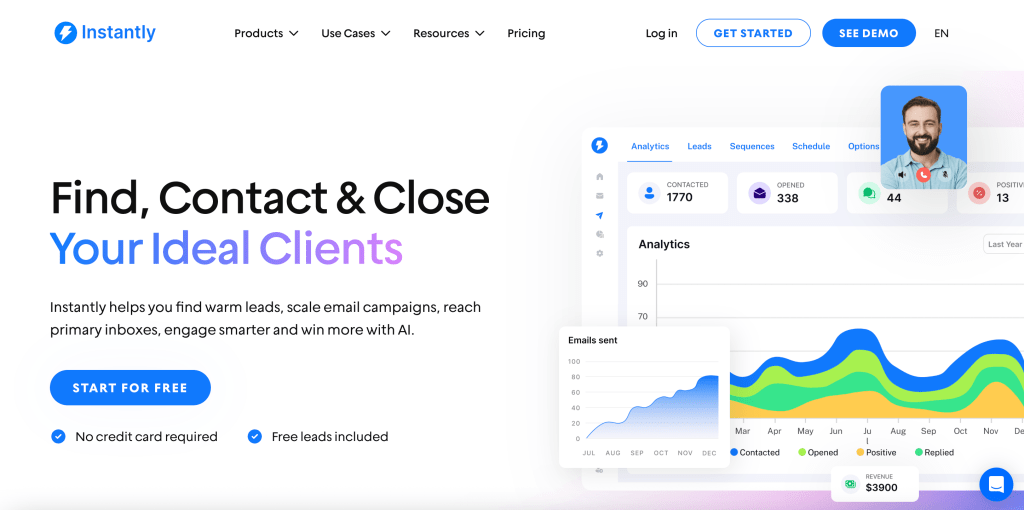
What it does: Instantly Manages unlimited email sender accounts with a focus on deliverability.
Here’s the thing about cold email: it’s not dead, but it’s definitely on life support if you don’t do it right. Instantly understands this and built their entire platform around keeping your emails out of spam folders.
Why Sales Teams Love It:
- Unlimited sender accounts (scale without limits)
- Smart inbox rotation prevents spam flags
- Detailed analytics that actually help you improve
The Reality Check:
- Email only (no LinkedIn or other channels)
- Requires technical setup for optimal results
- Your success depends heavily on your email list quality
Best Use Case: High-volume cold email campaigns where deliverability is your #1 concern.
4. GetSales.io: LinkedIn Outreach Done Right

What it does: Getsales.io automates LinkedIn + cold email outreach using cloud-based servers instead of risky browser extensions.
LinkedIn is still the golden channel for B2B, but most automation tools will get your account banned faster than you can say “connection request.”
GetSales.io solves this problem elegantly.
The Smart Approach:
- Cloud-based system mimics human behavior
- Built-in smart limits prevent account restrictions
- Dedicated proxies for each account
What You Should Know:
- LinkedIn-only focus (you’ll need other tools for email)
- Higher price point than Chrome extensions
- Setup requires some technical knowledge
ROI Reality: One client books 15-20 meetings monthly using GetSales + our targeting framework.
At $99/month, that’s roughly $5 per qualified meeting. Try getting that ROI with paid ads.
5. HeyReach: The Agency-Grade LinkedIn Automation
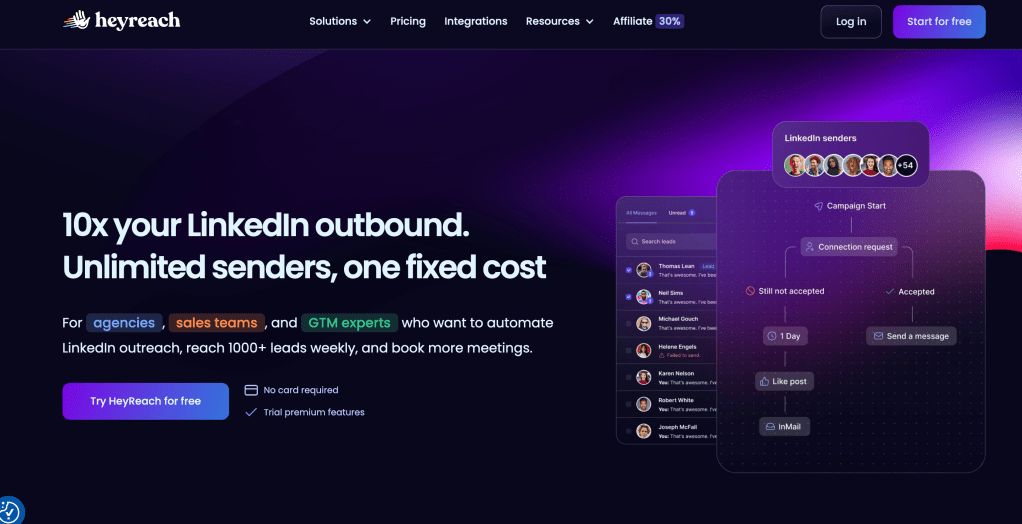
What it does: HeyReach manages LinkedIn outreach across multiple accounts from one centralized dashboard.
If GetSales is the reliable sedan, HeyReach is the luxury SUV. Built for agencies and larger sales teams who need to coordinate outreach across multiple LinkedIn profiles.
Enterprise Features:
- Multi-account management
- Team collaboration tools
- Advanced safety features
- Custom proxy configurations
Investment Considerations:
- Significantly more expensive than single-account tools
- Complex setup process
- Overkill for solo entrepreneurs
Ideal Client: B2B lead generation agencies managing outreach for 5+ clients simultaneously.
Best For: Sales reps who need quick contact lookup rather than bulk prospecting.
6. LinkedIn Sales Navigator: The Foundation Tool
What it does: Advanced LinkedIn search and lead management capabilities.
Sales Navigator isn’t sexy, but it’s essential. Think of it as the foundation your entire LinkedIn strategy is built on.
Why It’s Non-Negotiable:
- Most advanced targeting filters available
- Saved lead lists and alerts
- Perfect integration with automation tools
The Investment:
- $99/month per user
- Annual commitment required
- Features overlap with free LinkedIn
Reality Check: Yes, it’s expensive. But trying to do B2B outreach without Sales Navigator is like trying to cook without a kitchen.
7. Beehiiv (Newsletter & Lead Nurturing)
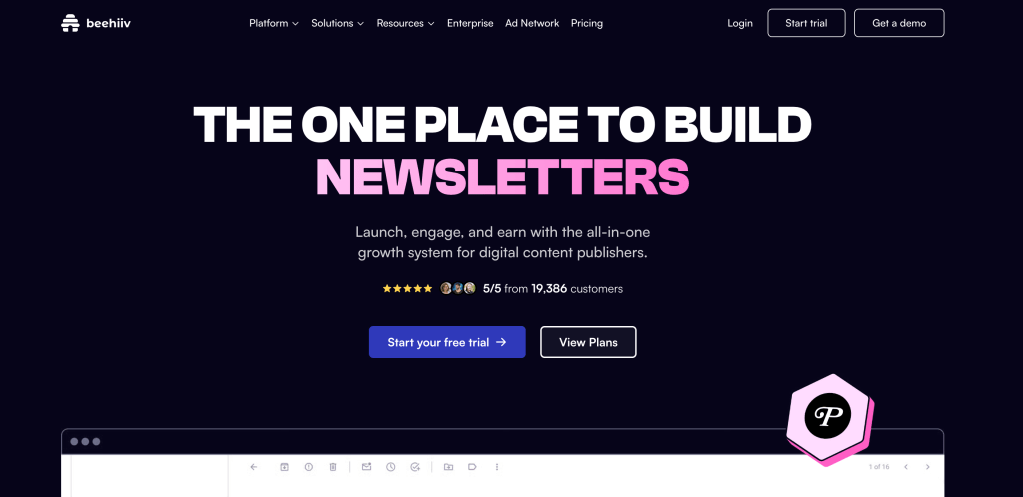
What it does: Beehiv is a Premium newsletter platform designed for B2B companies serious about content-driven lead generation and long-term nurturing.
Beehiiv isn’t just another email newsletter tool—it’s what happens when newsletter professionals build a platform specifically for growth. While everyone’s chasing the latest automation hack, smart companies are using Beehiiv to build genuine relationships through valuable content.
The Good:
- Superior deliverability rates (your emails actually reach inboxes)
- Advanced segmentation that makes personalization effortless
- Beautiful, responsive designs that don’t look like spam
- Analytics that actually help you understand subscriber behavior
The Reality Check:
- Learning curve if you’re used to basic email tools
- Higher investment than basic newsletter platforms
- Limited A/B testing on the free plan
- Success requires consistent, valuable content creation
Real Talk: I personally grew my newsletter (Six Figure AI Outreach) by atleast 100 subscribers in less than 1 month using Beehiiv
Best For: Companies building long-term relationships through valuable content and consistent nurturing rather than aggressive cold outreach.
8. GoHighLevel (All-in-One Hub)
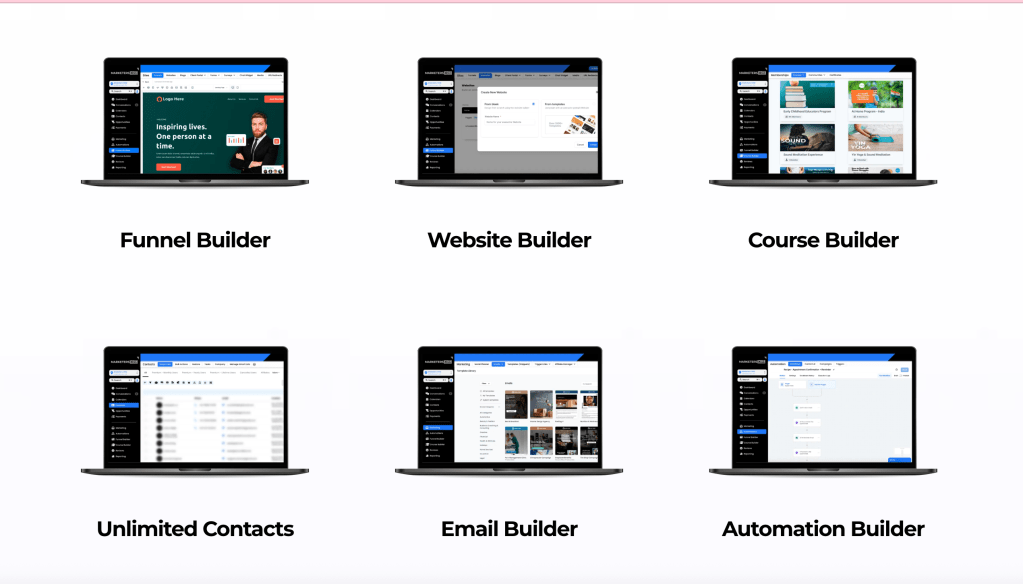
What it does: The ultimate communication powerhouse handling SMS, WhatsApp, email, calling, and AI Agents follow-up automation from one unified dashboard.
GoHighLevel is what happens when you get tired of juggling 8 different tools just to have a conversation with a prospect. It’s the closest thing to having a full marketing and sales team in software form.
Why It’s a Game-Changer:
- True omnichannel communication (prospects get consistent experience across all touchpoints)
- Powerful automation workflows that actually make sense
- Built-in CRM so nothing falls through the cracks
- Call tracking and recording (finally know which campaigns drive phone calls)
What You Should Know:
- Steep learning curve initially (plan for 2-3 weeks to get comfortable)
- Can feel overwhelming for small teams just starting out
- Higher monthly investment required ($97-$497/month)
- Some advanced features require additional add-ons
ROI Reality: Agencies love GHL because it replaces 5-8 separate tools while improving results. One client reduced their tool stack costs by 60% while increasing meeting bookings by 180%.
Perfect For: Agencies and growing companies that need comprehensive communication automation and don’t want to manage multiple vendor relationships.
9. Breakcold (Social CRM Management)
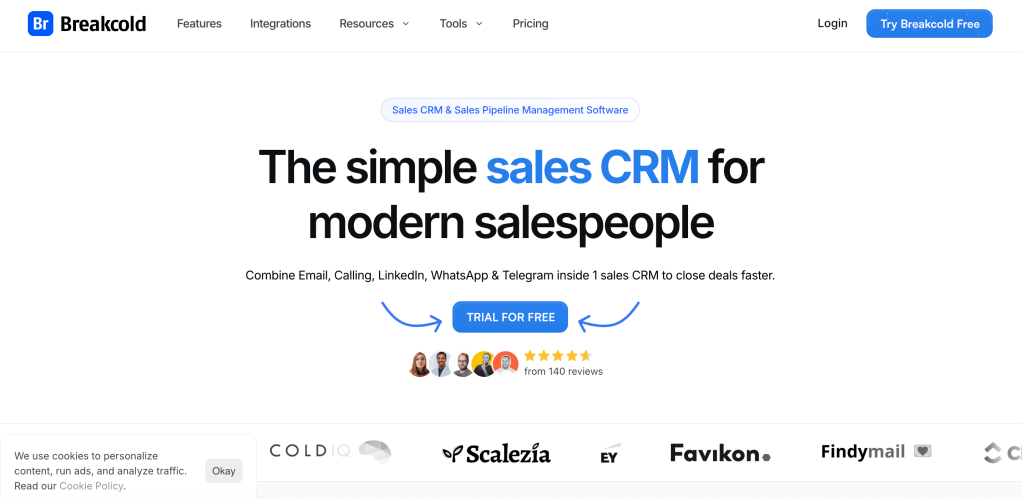
What it does: Breakcold transforms social media interactions on LinkedIn, Facebook, Email into structured CRM data, helping you build relationships before pitching anything.
Breakcold solves a problem most CRMs ignore: your prospects are active on social media, but traditional CRMs treat this like it doesn’t exist. Breakcold bridges that gap beautifully.
The Smart Approach:
- Tracks social media activity across all major platforms
- Relationship scoring based on actual engagement history
- Integrates with your existing CRM (doesn’t replace it, enhances it)
- Automated alerts when prospects are active or posting relevant content
Consider This:
- Relatively new platform (less established than competitors)
- Limited integrations currently (though growing rapidly)
- Requires you to be actively engaging on social media
- Best suited for B2B relationship-based selling
Ideal For: Relationship-focused sales teams who understand that social engagement often precedes sales conversations.
10. Skool (Community Management & Lead Nurturing)
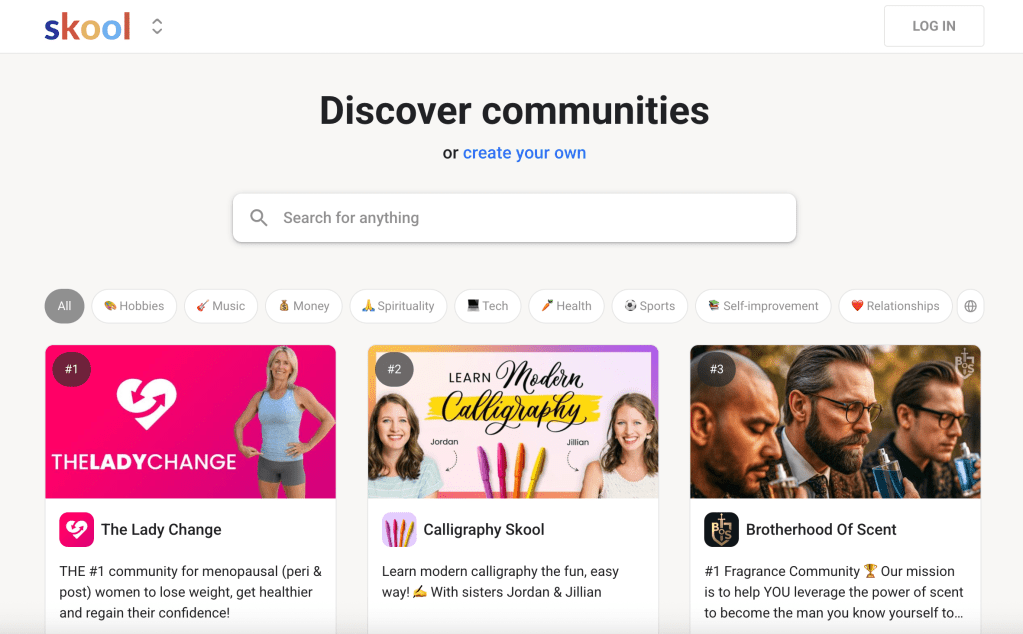
What it does: Skool helps creates private communities where prospects and customers gather, naturally qualifying leads through engagement and educational content.
Skool represents the future of B2B lead generation: instead of chasing prospects, you create a valuable space where they come to you and self-qualify through participation.
Why It’s Brilliant:
- High engagement rates (community members are 10x more engaged than email subscribers)
- Natural lead qualification (active participants are warmer prospects)
- Builds genuine relationships and authority simultaneously
- Gamification elements keep people coming back
The Investment Required:
- Consistent content creation and community management
- Monthly commitment to stay active and valuable
- Takes 3-6 months to build real momentum
- Limited customization compared to full community platforms
Success Story: A marketing agency built a 2,000-member community of business owners in 6 months. They now generate 25+ qualified leads monthly just from community engagement, with a 45% close rate.
Best For: Consultants and agencies focused on building long-term authority and relationships rather than quick transactional sales.
The SFC Framework: How We Use These Tools to Book 30+ Meetings Monthly
Alright, enough tool reviews.
Let’s talk about how to actually use this stuff to grow your business.
This is the exact framework we use at Six Figure Consulting to generate consistent results for clients:

Phase 1: Research & List Building (Week 1)
Tools Used: LinkedIn Sales Navigator + Apollo + Clay
Process:
- Define your ICP (Ideal Customer Profile) with surgical precision
- Build Intent targeted lists using Clay, Apollo, Sales Navigator’s advanced filters
- Enrich contact data using Apollo and Clay
- Validate data quality (aim for 90%+ accuracy)
Target Numbers:
- 500-1,000 prospects per list
- 3-5 lists for A/B testing
- Mix of seniority levels and company sizes
Phase 2: Message Creation & Personalization (Week 1-2)
Tools Used: ChatGPT + Claygent
Our Message Structure:
Subject: Quick idea for {{company}}'s growth

Hi {{firstName}},

I noticed {{company}} recently {{recent_trigger_event}} -
congrats on the progress.

We've been helping {{industry}} companies like {{similar_client}}
{{specific_result}} using {{our_methodology}}.

Would it make sense to share how we helped {{similar_client}}
achieve {{specific_outcome}}?

Best,
{{sender_name}}
Personalization Variables:
- Company news/growth
- Industry-specific pain points
- Competitor case studies
- Recent LinkedIn activity
Phase 3: Multi-Channel Outreach (Week 2-4)
Tools Used: Instantly.ai + GetSales.io
Sequence Structure:
| Day | Channel | Message Type | Purpose |
|---|---|---|---|
| 1 | Introduction | Awareness | |
| 3 | Connection Request | Social proof | |
| 7 | Value-add | Education | |
| 14 | Direct message | Engagement | |
| 21 | Case study | Social proof | |
| 30 | Final attempt | Last chance |
Volume Guidelines:
- LinkedIn: 20 connection requests daily (40 connection requests daily if on Sales Nav)
- Email: 20 emails daily per email id
- Target Volume: 100-200 outreach messages per day
Phase 4: Conversation Management & Booking (Ongoing)
Tools Used: Getsales + GHL + Breakcold
Response Management:
- Positive responses: Immediately book meeting
- Questions: Provide value-first answer
- Objections: Address with case studies
- Unsubscribes: Clean lists immediately
Meeting Booking Process:
- Send calendar link immediately
- Follow up if no booking within 24 hours
- Send meeting prep email 24 hours before
- Text reminder 2 hours before
Phase 5: Analytics & Optimization (Weekly)
Key Metrics to Track:
| Metric | Benchmark | What It Tells You |
|---|---|---|
| Open Rate | 60-80% | Email deliverability |
| Response Rate | 15-25% | Message relevance |
| Meeting Book Rate | 8-15% | Qualification accuracy |
| Show-up Rate | 70-85% | Prospect quality |
| Close Rate | 20-40% | Sales process effectiveness |
Optimization Process:
- A/B test subject lines weekly
- Refine targeting based on response quality
- Update message templates monthly
- Clean email lists after each campaign
Tool Integration Strategies: Making Your Lead Generation Stack Work Together
The real magic happens when your tools work together seamlessly. Here’s how to create integration that actually improves results:
Integration Map: The Perfect Lead Generation Workflow
LinkedIn Sales Navigator + Apollo → Clay → Instantly + GetSales → CRM → $$$
Stage 1: Research (Sales Navigator)
- Export prospect lists
- Save to CSV with LinkedIn URLs
Stage 2: Enrichment (Apollo + Clay)
- Enrich email addresses and phone numbers
- Add company data and technographics
- Research recent company news and triggers
Stage 3: Personalization (Clay + AI Tools)
- Generate personalized first lines
- Create relevant case study matches
- Customize messaging by industry/role
Stage 4: Outreach (Instantly + GetSales)
- Import enriched lists
- Launch multi-channel sequences
- Track engagement and responses
Stage 5: Management (CRM)
- Sync all activities and responses
- Track meeting outcomes
- Monitor pipeline progression
API Connections vs. Manual Export/Import
APIs to Prioritize:
- Clay ↔ Apollo (data enrichment)
- Instantly ↔ HubSpot (activity tracking)
- LinkedIn automation tools ↔ CRM (contact management)
Manual Processes That Work:
- Sales Navigator → CSV export
- Response management (requires human judgment)
- List cleaning and segmentation
Data Flow Best Practices
1. Standardize Data Fields All tools should use consistent naming:
first_namenotfirstNameorFirst Namecompany_namenotcompanyorCompany Namejob_titlenottitleorJob Title
2. Create Data Validation Rules
- Email format validation
- Phone number formatting
- Required field enforcement
3. Build Error Handling
- Duplicate detection
- Failed enrichment flagging
- Data quality scoring
Measuring Success: Lead Generation KPIs That Actually Matter
Stop measuring everything and start measuring what matters. Here are the KPIs that correlate with actual business growth:
Primary KPIs (Weekly Tracking)
| KPI | Formula | Benchmark | Why It Matters |
|---|---|---|---|
| Cost Per Meeting | Total spend ÷ Meetings booked | $50-$150 | True cost of lead generation |
| Meeting Show Rate | Showed up ÷ Meetings booked | 75%+ | Lead quality indicator |
| Pipeline Velocity | Days from lead to close | 30-90 days | Process efficiency |
| Lead-to-Opportunity | Opportunities ÷ Total leads | 10-20% | Targeting accuracy |
Secondary KPIs (Monthly Tracking)
| KPI | Formula | Benchmark | Insight |
|---|---|---|---|
| Email Deliverability | Delivered ÷ Sent | 95%+ | Technical health |
| Response Rate | Responses ÷ Delivered | 15-25% | Message effectiveness |
| LinkedIn Acceptance | Accepted ÷ Sent requests | 60%+ | Targeting relevance |
| Sequence Completion | Completed full sequence | 80%+ | Process reliability |
Advanced Analytics
Cohort Analysis by Source: Track how leads from different tools/channels perform over time.
A/B Testing Framework:
- Test one variable at a time
- Run tests for minimum 100 interactions
- Implement winners immediately
Attribution Modeling: Understand which touchpoints contribute most to closed deals.
Conclusion: Lead Generation Success Requires Strategy + Execution (Not More Tools)
After walking through this comprehensive guide, here’s what I want you to remember:
Tools Don’t Make Results – Systems Do
The most expensive lead generation software won’t save a broken process. Companies crushing it with basic tool stacks while others fail with enterprise solutions proves this daily. Focus on understanding your market, crafting compelling messages, and building repeatable systems.
Quality Always Beats Quantity
Stop chasing vanity metrics. 100 highly-targeted prospects with personalized outreach will outperform 10,000 generic emails every single time. The math is simple: better targeting + relevant messaging = higher response rates = more meetings = increased revenue.
The Magic Happens in Integration
Your lead generation tools should work together like a well-orchestrated symphony. When Apollo feeds enriched data to Clay, which personalizes messages for Instantly and GetSales, while Breakcold tracks social engagement and GHL manages follow-up – that’s when you see exponential results.
Consistency Wins Every Time
The companies dominating B2B lead generation show up every single week with valuable, relevant outreach. It’s not glamorous, but it works. One-off campaigns fail. Systematic, ongoing processes build empires.
Measurement Drives Improvement
Track what matters: cost per meeting, meeting-to-opportunity conversion, and pipeline velocity. Everything else is vanity. Use these metrics to optimize your approach continuously.
The Framework We’ve Shared Works
Phase 1: Research & targeting with Sales Navigator, Apollo, and Clay
Phase 2: Personalization using AI and intent data
Phase 3: Multi-channel outreach via Instantly and GetSales
Phase 4: Relationship management through Breakcold and GHL Phase 5: Community nurturing with Beehiiv and Skool
This isn’t theory – it’s the exact system we use to generate 30+ qualified meetings monthly for clients across the UAE, Europe, and US.
Your Next Steps Are Simple
- Choose your core stack (start with 3-4 tools maximum)
- Master the fundamentals before adding complexity
- Implement the SFC framework systematically
- Track metrics that matter and optimize relentlessly
- Stay consistent for minimum 90 days before judging results
The Reality Check
Most people will read this guide, get excited about the possibilities, and then do nothing. They’ll bookmark it, share it with their team, maybe screenshot a few sections.
But the companies that actually grow? They take action.
Information without implementation is just entertainment.
Ready to Transform Your Pipeline?
You have two choices:
Option 1: Do It Yourself Take everything in this guide and implement it systematically. Start with the tools that make sense for your budget, follow our proven frameworks, and commit to consistent execution.
Option 2: Let Us Handle Everything At Six Figure Consulting, we use these exact strategies and tools to build predictable pipeline systems for B2B companies. We handle the complete setup, management, and optimization while you focus on closing deals.
What we manage:
- Complete tool setup and integration
- Intent-based prospect research and targeting
- AI-powered message personalization
- Multi-channel campaign execution
- Social relationship building
- Response handling and meeting booking
- Ongoing optimization and scaling
What you get:
- Predictable meeting flow within 30 days
- Weekly performance reports and insights
- Dedicated account management
- Proven ROI (clients average 400%+ returns)
The tools and strategies are all here. The frameworks are proven. The only question remaining is: are you ready to execute?
If yes, schedule a call with us here and let’s see if we are a good fit
Because while your competitors are still hunting for leads like it’s 2015, you could be building the systematic, scalable pipeline that transforms your business.
The choice is yours.
Ankit Modi
Feel free to subscribe to this blog below by entering your email id to receive such awesome posts directly via email.

Leave a comment