Introduction: The Painful Truth About Manual Prospecting
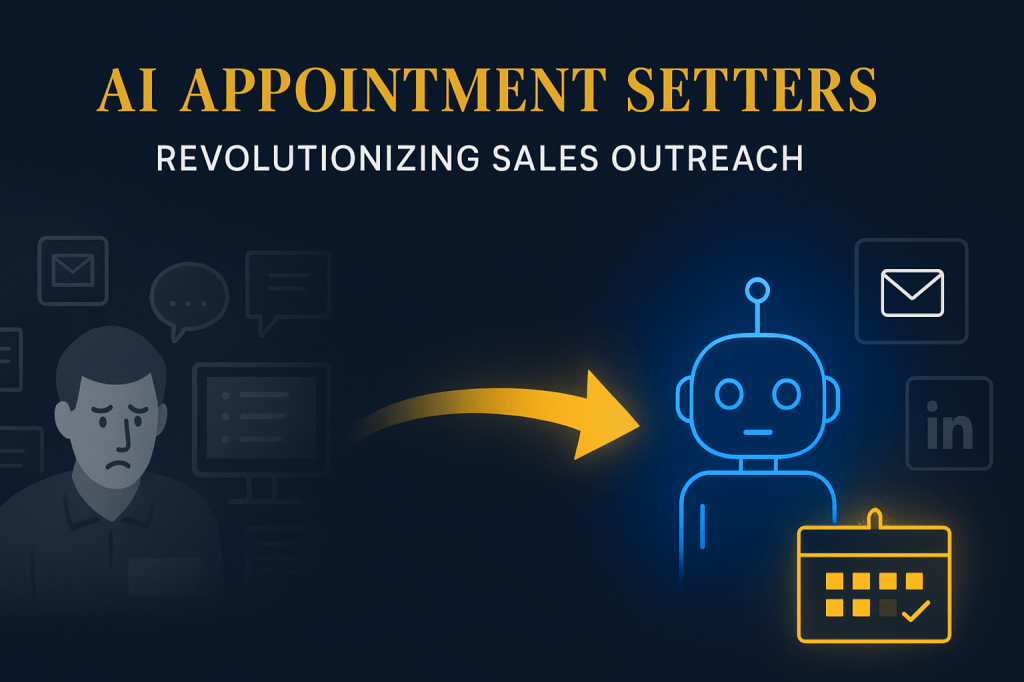
Let’s be honest for a moment. You’ve spent countless hours crafting the perfect cold emails. You’ve written and rewritten LinkedIn messages until your eyes hurt.
You’ve built follow-up sequences that would make a marketing guru proud. Yet here you are, staring at a calendar that looks as empty as a ghost town.
Sound familiar? You’re definitely not alone in this struggle.
The traditional approach to sales outreach is showing serious cracks.
What used to work just a few years ago has changed. Hiring a team of SDRs and training them for weeks has become an expensive gamble.
Hoping they’d consistently deliver results is a risk most businesses can no longer afford to take.
Think about it: your SDRs get sick. They have bad days. They forget to follow up at the right time. They can only handle so many conversations before burning out.
Meanwhile, your potential customers are replying to emails at midnight. They are sending LinkedIn messages during lunch breaks. They expect instant responses in our always-on digital world.
This disconnect occurs when prospects want to engage, but your human team is not available. It creates massive gaps in your sales process.
Every missed opportunity represents lost revenue, and in today’s competitive landscape, you simply can’t afford to let potential customers slip through the cracks.
But what if there was a better way?
What if you could have a sales representative who never sleeps? They never get tired or forget to follow up.
They can handle hundreds of conversations simultaneously while maintaining the same level of enthusiasm and professionalism.
Welcome to the revolutionary world of AI Appointment Setters.
This is the game-changing technology transforming how modern businesses approach sales outreach. It is also changing lead conversion.
In this comprehensive guide, we’ll dive deep into everything you need to know about AI appointment setters. We’ll explore what they are and how they work behind the scenes.
We’ll explain why they’re becoming essential for any serious sales operation.
Most importantly, we’ll show you how to start implementing one in your business today. You can do this without breaking the bank or spending months on complex development.
Table of Contents
- The Great Divide: Manual Outreach vs AI Appointment Setters
- Demystifying AI Appointment Setters: What They Are and How They Actually Work
- The Compelling Advantages of Embracing AI for Appointment Setting
- Real-World Applications: How Different Industries Are Winning with AI
- Your Implementation Roadmap: Three Proven Paths to AI Success
- The Ultimate Toolkit: Top AI Tools That Actually Deliver Results
- The Freelancer Route: Finding and Hiring the Right Talent
- Done-for-You Solutions: Agencies That Handle Everything
- Taking Action: Your Next Steps to AI-Powered Growth
1. The Great Divide: Manual Outreach vs AI Appointment Setters

Imagine for a moment that manual outreach is like being a solo fisherman with a single fishing rod.
You cast your line into the water, wait patiently for a bite, reel in your catch (if you’re lucky), and then start the process all over again. It’s methodical, sure, but it’s also incredibly time-consuming and limits how much you can accomplish in a day.
Now picture an AI appointment setter as a sophisticated fishing operation with multiple boats, advanced sonar technology, and nets that can cover vast areas of ocean simultaneously.
Not only can you catch more fish, but you can also operate around the clock and adjust your strategy based on real-time data about where the fish are biting.
Let’s break down the stark differences between these two approaches:
The Manual Approach: Why It’s Becoming Obsolete
When you rely on human SDRs for your outreach efforts, you’re essentially accepting several built-in limitations that directly impact your bottom line:
Limited Daily Output: Even your most productive SDR can only send between 50 to 100 personalized messages per day. That’s assuming they’re having a good day, feeling motivated, and aren’t dealing with any personal distractions. Most days, the reality falls far short of this ideal.
Human Error Factor: We’re all human, and humans make mistakes. Your SDR might forget to follow up with a hot prospect, send the wrong message to the wrong person, or miss subtle buying signals in a prospect’s response. These seemingly small errors compound over time and cost you real money.
Scaling Challenges: Want to double your outreach volume? You’ll need to double your SDR team, which means double the salaries, double the training time, double the management overhead, and double the chance for things to go wrong.
Time Zone Limitations: Your prospects don’t operate on your schedule. When someone in a different time zone replies to your email at 2 AM your time, they’re not going to wait until your SDR gets to the office to continue the conversation.
The AI Revolution: How Technology Changes Everything
An AI appointment setter flips this entire paradigm on its head, offering capabilities that would be impossible for any human team to match:
Instant Response Times: The moment a prospect replies to your outreach—whether it’s 2 PM or 2 AM—your AI system springs into action. This immediate response dramatically increases your chances of converting that interest into a booked appointment.
Unlimited Scalability: Your AI can engage in hundreds of conversations simultaneously without breaking a sweat. Whether you’re nurturing 10 leads or 10,000, the system performs at the same high level.
Perfect Consistency: Every interaction follows your proven scripts and best practices. There are no off days, no mood swings, and no deviation from your winning formula.
Multi-Channel Mastery: While your human SDR might struggle to keep up with email alone, your AI system can simultaneously manage conversations across email, LinkedIn, SMS, WhatsApp, Facebook Messenger, and any other platform where your prospects hang out.
Data-Driven Learning: Unlike humans who might repeat the same mistakes, AI systems continuously learn from every interaction, getting better at identifying buying signals and crafting responses that convert.
2. Demystifying AI Appointment Setters: What They Are and How They Actually Work
If you’re wondering what exactly happens behind the scenes when an AI appointment setter takes over your lead engagement process, you’re asking the right questions.
Understanding the technology will help you make better decisions about implementation and set realistic expectations for results.
The Core Technology: More Than Just Chatbots
At its heart, an AI appointment setter is a sophisticated system that combines multiple artificial intelligence technologies to create what feels like a natural, human-like conversation with your prospects.
But unlike simple chatbots that follow rigid decision trees, modern AI appointment setters use advanced language models that can understand context, detect subtle nuances in communication, and respond appropriately to a virtually unlimited range of scenarios.
Think of it as having a super-intelligent sales assistant who has studied thousands of successful sales conversations, memorized every objection and the perfect response, and can apply this knowledge instantly to every new interaction.
The Step-by-Step Process: From Lead to Appointment
Here’s exactly what happens when your AI appointment setter encounters a new lead:
Step 1: Trigger Detection The system continuously monitors all your communication channels for specific triggers that indicate a lead is ready for engagement. These triggers might include:
- A reply to your cold email
- A new connection request acceptance on LinkedIn
- A form submission on your website
- An incoming call from a potential prospect
Step 2: Context Analysis Once a trigger is detected, the AI immediately analyzes the full context of the interaction. It reviews the prospect’s previous communications, their profile information, their company details, and any other available data to understand their current situation and likely needs.
Step 3: Personalized Response Generation Using this contextual understanding, the AI crafts a personalized response that feels natural and relevant. This isn’t a template with the name swapped out—it’s a genuinely customized message that addresses the specific context of that prospect’s situation.
Step 4: Conversation Management As the conversation progresses, the AI handles objections, answers questions, and gradually guides the prospect toward booking an appointment. It knows when to be persistent and when to back off, when to provide more information and when to ask for the close.
Step 5: Calendar Integration and Booking When the prospect shows interest in scheduling a call, the AI seamlessly presents your calendar availability and handles the entire booking process, including sending confirmation emails and calendar invitations.
Real-World Example in Action
Let’s say someone replies to your cold email at 10:30 PM on a Tuesday with: “This sounds interesting, but I’m not sure if it’s right for our company size.”
A human SDR would see this message the next morning and might respond with something generic like: “Thanks for your interest! I’d be happy to discuss your specific situation. Are you available for a call this week?”
Your AI appointment setter, however, responds within minutes with something like: “Thanks for getting back to me, Sarah! I completely understand that concern—company size is definitely important when evaluating solutions like ours.
We’ve actually helped several companies in the 50-100 employee range (which I noticed is similar to your company size based on your LinkedIn) achieve great results. Would you be open to a brief 15-minute call tomorrow or Thursday where I can share a case study of a company very similar to yours? Here’s my calendar if anything works: [calendar link].”
Notice how the AI:
- Responded immediately, while the prospect’s interest was still hot
- Acknowledged and addressed the specific concern
- Referenced relevant information about the prospect’s company
- Provided social proof relevant to their situation
- Made it easy to take the next step with a specific time suggestion and calendar link
This level of personalized, immediate response is what separates AI appointment setters from traditional approaches and explains why they’re so effective at converting prospects into booked appointments.
3. The Compelling Advantages of Embracing AI for Appointment Setting
The benefits of implementing an AI appointment setter extend far beyond just saving money on SDR salaries. When you explore the influence of this technology, its effect on your entire sales operation becomes apparent. The advantages are even more compelling.
Dramatic Cost Reduction Without Sacrificing Quality
Let’s start with the most obvious benefit—the financial impact. The average SDR salary, including benefits and overhead, costs between $60,000 to $80,000 per year. That’s per person.
If you need a team of three SDRs to handle your current volume (which most growing companies do), you’re looking at $180,000 to $240,000 annually just in personnel costs.
An AI appointment setter can often replace that entire team for less than $30,000 per year in software costs and setup fees.
But here’s the kicker—it’s not just cheaper, it’s often more effective. You’re not making a trade-off between cost and quality; you’re getting both improved results and dramatic cost savings.
The Always-On Advantage: Never Miss Another Opportunity
In our interconnected world, business doesn’t stop at 5 PM. Your prospects are checking email during their commute, browsing LinkedIn during lunch breaks, and thinking about business challenges at all hours. When they have a moment of interest and reach out to you, that’s your golden opportunity to engage.
Traditional sales teams miss these moments constantly. A prospect replies to your email at 11 PM, but your SDR doesn’t see it until 9 AM the next day. By then, that prospect has likely moved on to other priorities, and your window of opportunity has closed.
AI appointment setters eliminate this problem entirely.
Whether it’s Christmas morning or 3 AM on a Sunday, your AI system is ready to engage the moment a prospect shows interest.
This immediate response capability alone can improve your conversion rates by 50% or more, simply because you’re catching prospects when they’re actually thinking about your solution.
Consistency That Drives Predictable Results
One of the biggest challenges with human-driven outreach is inconsistency.
Your top-performing SDR has a great day and books five appointments. The next day, they’re dealing with personal issues and only books one.
Your newest hire is still learning the ropes and struggles to handle objections effectively. Your experienced SDR decides to try a new approach and accidentally confuses prospects with mixed messaging.
These variations in performance make it nearly impossible to predict your pipeline or scale your operations reliably.
With AI appointment setters, every interaction follows your proven best practices.
The system doesn’t have good days or bad days—it performs at peak level consistently, making your revenue projections much more accurate and your business growth more predictable.
Scalability Without Complexity
Traditional scaling in sales is messy and expensive. To double your outreach, you need to:
- Hire additional SDRs (lengthy recruitment process)
- Train them on your products and processes (weeks or months)
- Provide them with tools and workspace (additional overhead)
- Manage and motivate a larger team (management complexity)
- Deal with inevitable turnover and start the process over
With AI, scaling is as simple as adjusting a few parameters in your system. Want to double your outreach volume? Just increase your sending limits and let the AI handle the additional conversations. Want to expand to new markets or verticals?
Train your AI on new messaging and turn it loose. The complexity remains the same whether you’re handling 100 leads per month or 10,000.
Superior Data Collection and Optimization
Human SDRs can tell you that a prospect wasn’t interested, but they might not capture the specific language the prospect used or the exact objection that killed the deal.
AI systems, on the other hand, record and analyze every interaction, identifying patterns that humans might miss.
This data becomes incredibly valuable for optimizing your entire sales process.
You might discover that prospects who mention a specific pain point are three times more likely to book appointments, allowing you to adjust your targeting.
Or you might find that certain response times dramatically impact conversion rates, helping you optimize your follow-up sequences.
4. Real-World Applications: How Different Industries Are Winning with AI

The beauty of AI appointment setters lies in their versatility. Unlike specialized sales tools that only work for specific industries, AI appointment setters can be adapted to virtually any business model that involves lead generation and appointment booking. Let’s explore how different industries are leveraging this technology to transform their sales processes.
Agencies: From Feast or Famine to Consistent Pipeline
Digital marketing agencies face a unique challenge: they’re experts at generating leads for their clients but often struggle with their own lead generation and appointment setting.
The irony isn’t lost on agency owners who can drive thousands of leads for clients but have trouble keeping their own calendars full.
Traditional agency sales processes typically involve:
- Cold outreach to potential clients
- Multiple follow-ups over weeks or months
- Lengthy sales cycles with lots of back-and-forth
- Inconsistent results based on who’s doing the outreach
AI appointment setters are revolutionizing this process for agencies. Here’s how:
Automated Prospect Engagement: When a potential client replies to a cold email or LinkedIn message, the AI immediately engages with relevant questions about their current marketing challenges, budget range, and timeline for making decisions.
Qualification at Scale: Instead of booking discovery calls with every interested prospect, the AI can qualify leads upfront, asking about company size, current marketing spend, and specific pain points. This ensures that only high-quality prospects make it onto the agency owner’s calendar.
Case Study Delivery: Based on the prospect’s industry and challenges, the AI can automatically deliver relevant case studies and results, building credibility before the actual sales call.
As an appointment setting agency we were spending 25-30+ hours per week per sdr on manual outreach and appointment setting, booking about 8-10 discovery calls monthly.
After implementing the new AI appointment setter system, we reduced their time investment to just 2 hours per week for oversight while booking 15-20+ qualified appointments monthly.
This is how I am now able to focus on closing deals and creating blogs like these. :)
Coaches and Consultants: Scaling Beyond Personal Time Constraints
Individual coaches and consultants face the ultimate scaling challenge—their success is often tied directly to their personal time and energy. Every hour spent on lead generation and appointment setting is an hour not spent serving existing clients or developing new programs.
For many consultants, the traditional approach involves:
- Personal networking and referral generation
- Time-intensive one-on-one prospecting
- Manual follow-up with warm leads
- Difficulty maintaining momentum during busy client periods
AI appointment setters solve these challenges by:
24/7 Lead Nurturing: Your AI continues engaging prospects even when you’re in client sessions or focused on program delivery. A potential client who visits your website at midnight can immediately start a conversation about their challenges and goals.
Intelligent Lead Scoring: The AI can ask strategic questions to identify the prospects most likely to invest in high-value programs, ensuring your sales calls are focused on qualified opportunities.
Automated Value Delivery: Before booking appointments, the AI can deliver valuable content, mini-assessments, or insights that demonstrate your expertise and build trust with prospects.
Consider the case of a business coach who was manually managing leads from her website, LinkedIn, and referral network. She was spending over 10 hours each week on lead follow-up. She often let promising prospects fall through the cracks during busy periods.
Her AI appointment setter now handles initial engagement, qualification, and booking, allowing her to focus exclusively on high-value activities. Her monthly appointment volume increased by 200% while her time investment decreased by 80%.
SaaS Companies: Accelerating the Demo-to-Close Timeline
Software-as-a-Service companies typically have complex sales cycles. These involve multiple touchpoints: website visits, content downloads, demo requests, trial signups, and eventually, sales calls.
Traditional processes often involve significant delays between these stages, giving prospects time to lose interest or choose competitors.
AI appointment setters streamline this process by:
Immediate Demo Scheduling: When someone requests a demo, the AI instantly engages to understand their specific use case and schedule the demo for the earliest possible time that works for both parties.
Trial User Activation: For prospects who sign up for trials but don’t actively use the software, the AI can reach out with personalized onboarding assistance and offer calls with product specialists.
Feature-Specific Engagement: Based on how prospects use the trial software, the AI can proactively reach out to discuss specific features or use cases that align with their behavior patterns.
A project management SaaS company was losing 60% of their demo requests to no-shows and poor follow-up.
Their AI appointment setter now immediately engages demo requests, asks qualifying questions, and schedules demos for optimal times based on the prospect’s stated preferences.
Their demo show-up rate increased to 85%, and their demo-to-trial conversion rate improved by 45%.
5. Your Implementation Roadmap: Three Proven Paths to AI Success
Now that you understand the power and potential of AI appointment setters, you’re probably wondering about the practical steps to get started.
The good news is that you don’t need to be a technical genius or have a massive budget to begin leveraging this technology.
There are three main approaches, each with its own advantages depending on your situation, technical comfort level, and budget.
Path 1: The DIY Route – Using Existing AI Tools and Platforms
This approach is perfect for entrepreneurs and small business owners who want to maintain control over their systems, learn how everything works, and start with a smaller investment. It requires some technical learning but nothing that can’t be mastered with dedication and the right resources.
What This Approach Involves: You’ll be combining various AI tools and platforms to create a custom appointment setting system.
Think of it like building with sophisticated Lego blocks—each tool handles a specific function, and you connect them to create a powerful, automated system.
The Core Components You’ll Need:
- Email Automation Platform: Tools like Instantly or Apollo handle your cold email outreach and can detect when prospects reply to your messages.
- AI Conversation Engine: Services like OpenAI’s GPT models or specialized platforms provide the artificial intelligence that powers natural conversations with your prospects.
- Workflow Automation: Platforms like N8N, Zapier, or Make.com connect all your tools together and trigger actions based on prospect behavior.
- Calendar Booking System: Calendly, GHL, or similar tools handle the actual appointment scheduling once prospects are ready to book.
- CRM Integration: Your customer relationship management system keeps track of all interactions and prospect data.
Step-by-Step Implementation Process:
- Start with Email Reply Detection: Set up your email automation platform to flag when prospects reply to your outreach campaigns.
- Create Your AI Conversation Logic: Develop the prompts and conversation flows that your AI will use to engage prospects, handle objections, and guide them toward booking appointments.
- Build Your Automation Workflows: Connect all the pieces so that when a prospect replies, your AI automatically engages, qualifies them, and presents calendar booking options.
- Test and Optimize: Start with a small group of prospects to test your system, then continuously improve based on real-world results.
Advantages of the DIY Approach:
- Lower monthly costs (typically $200-500 per month depending on volume)
- Complete control over your messaging and processes
- Deep understanding of how everything works
- Ability to customize every aspect of the system
- Valuable technical skills that benefit your entire business
Considerations:
- Requires 20-40 hours of initial setup and learning
- Ongoing maintenance and optimization needed
- You’re responsible for troubleshooting technical issues
- Results depend heavily on your configuration and optimization skills
Who This Works Best For:
- Tech-savvy entrepreneurs who enjoy learning new systems
- Businesses with limited budgets who can invest time instead of money
- Companies that want deep customization and control
- Teams with some technical resources or willingness to develop them
Path 2: The Freelancer Route – Hiring Specialists to Build Your System
This middle-ground approach combines the cost-effectiveness of DIY with the expertise of professionals.
You get a custom-built system without the learning curve, while still maintaining more control and lower ongoing costs than full-service agencies.
What This Approach Involves: You hire experienced freelancers who specialize in AI automation and sales systems. They will build, configure, and optimize your appointment setting system. This is done according to your specific needs and preferences.
Finding the Right Freelance Talent:
Where to Look:
- Upwork: Search for terms like “AI SDR automation,” “ChatGPT integration,” “sales workflow automation,” or “appointment setting bot”
- Fiverr: Look for gigs related to chatbot development, AI automation, or sales funnel creation
- Specialized Communities: Join AI automation Facebook groups, Skool communites, or Reddit communities where practitioners share knowledge and offer services
What to Look For in Freelancers:
- Portfolio showing previous AI appointment setting projects
- Understanding of both the technical and sales aspects of the system
- Experience with the specific tools and platforms you want to use
- Clear communication skills and project management approach
- References from previous clients with similar projects
The Collaboration Process:
- Requirements Gathering: Work with your chosen freelancer to define exactly what you need—which channels to cover, what types of conversations to handle, integration requirements, etc.
- System Architecture: The freelancer designs the overall system architecture, choosing the best tools and platforms for your specific situation.
- Development and Integration: They build and connect all the components, creating your custom AI appointment setting system.
- Testing and Refinement: You work together to test the system with real prospects and refine the conversations and workflows based on results.
- Training and Handover: The freelancer teaches you how to manage and optimize the system going forward.
Investment Expectations:
- Initial setup: $2,000 – $8,000 depending on complexity
- Ongoing tool costs: $300 – 800 per month
- Optional ongoing optimization: $500 – 1,500 per month
Advantages of the Freelancer Route:
- Professional setup without agency overhead costs
- Custom system tailored to your specific needs
- Learn from experts while maintaining control
- Faster implementation than DIY approach
- Access to specialized knowledge and best practices
Considerations:
- Need to carefully vet freelancers for quality and reliability
- Communication and project management requirements
- May require some technical understanding to effectively collaborate
- Quality can vary significantly between different freelancers
Who This Works Best For:
- Businesses with moderate budgets who want professional results
- Companies that need custom solutions but lack internal technical resources
- Entrepreneurs who want to learn the system without building it from scratch
- Teams that prefer to focus on sales and marketing rather than technical implementation
Path 3: The Full-Service Agency Route – Complete Done-for-You Implementation
This approach is perfect for businesses. They can focus entirely on their core operations. They can leave the AI implementation to proven experts.
You get faster results, guaranteed performance, and ongoing optimization without any technical involvement on your part.
What This Approach Involves:
You partner with an agency that specializes in AI appointment setting systems.
They handle everything from strategy and setup to ongoing optimization and performance management, delivering qualified appointments directly to your calendar.
What Full-Service Agencies Typically Provide:
Strategic Planning: Analysis of your current sales process, target market, and goals to design an optimal AI appointment setting strategy.
Complete Technical Implementation: Setup and integration of all necessary tools, platforms, and workflows without any technical involvement required from your team.
Content and Conversation Development: Creation of all messaging, conversation flows, objection handling scripts, and personalization elements based on your brand and market.
Multi-Channel Integration: Implementation across email, LinkedIn, SMS, WhatsApp, and other relevant channels where your prospects are active.
Ongoing Optimization: Continuous monitoring, testing, and improvement of conversation performance, conversion rates, and appointment quality.
Performance Reporting: Regular reports showing key metrics like response rates, appointment booking rates, and ROI on your investment.
Account Management: Dedicated support for questions, strategy adjustments, and campaign management.
The Agency Engagement Process:
- Discovery and Strategy Session: Deep dive into your business, ideal customers, current sales process, and goals for the AI appointment setting system.
- System Design and Approval: The agency presents their recommended approach, tools, messaging strategy, and timeline for implementation.
- Implementation Phase: Complete setup and integration of your AI appointment setting system, typically taking 2-4 weeks.
- Testing and Launch: Controlled testing with a small prospect group, followed by full campaign launch once performance meets expectations.
- Ongoing Optimization and Management: Continuous monitoring and improvement of system performance, with regular strategy reviews and adjustments.
Investment Expectations (based on scope and complexity):
- Setup and implementation: $2,500 – $10,000+
- Monthly management: $1,000 – $5,000+
- Performance-based options: Some agencies offer revenue-sharing models upon results.
Advantages of the Full-Service Route:
- Fastest time to results (typically 2-4 weeks to launch)
- Access to proven strategies and best practices
- No technical learning curve or ongoing management required
- Professional optimization and performance improvement
- Guaranteed results and performance standards
- Focus your time on closing deals rather than managing systems
Considerations:
- Higher investment required upfront and ongoing
- Less control over specific technical implementations
- Dependency on agency for changes and optimization
- Need to choose agencies carefully based on track record and expertise
Who This Works Best For:
- Established businesses with strong cash flow
- Companies that prefer to focus on core competencies
- Teams without technical resources or interest in learning systems
- Businesses that need guaranteed results within specific timeframes
- Organizations that value speed of implementation over cost optimization
6. The Ultimate Toolkit: Top AI Tools That Actually Deliver Results

Choosing the right tools for your AI appointment setting system can make the difference between mediocre results and game-changing success.
After testing dozens of platforms and seeing what works in real-world implementations, here are the tools that consistently deliver the best results across different business types and sizes.
Here’s a comprehensive comparison table that summarizes all the tools and platforms you mentioned across categories like email automation, LinkedIn engagement, video personalization, data enrichment, and voice AI.
🧩 AI Appointment Setting Tool Landscape
| Category | Tool | Website | Key Features | Best For |
|---|---|---|---|---|
| Email Automation & Reply Detection | Instantly | instantly.ai | – Deliverability optimization- Real-time AI-triggered reply detection- Multi-account scaling- Built-in warmup- Analytics | B2B teams doing high-volume cold email outreach |
| All-in-One AI SDR Platform | GetSales | getsales.io | – Pre-trained sales AI- Multi-channel outreach- Lead scoring- CRM sync- ROI tracking | Businesses seeking an end-to-end AI SDR system |
| LinkedIn Automation | Closely | get.closelyhq.com/ankit | – Human-style follow-ups- AI-powered responses- Advanced targeting- LinkedIn compliance | Consultants and agencies engaging on LinkedIn |
| HeyReach | heyreach.io | – Multi-account LinkedIn scaling- Team collaboration- Campaign performance tracking- CRM integrations | Teams needing to scale LinkedIn outreach | |
| Video Personalization | Repliq | repliq.co | – AI-personalized videos- Scalable video creation- Email/LinkedIn integration- Custom branding- Engagement tracking | High-touch service providers needing trust-building |
| Lead Intelligence & Data | Apollo | get.apollo.io/c8m5kus2n3vx | – 250M+ contacts- Verified phone/email- Advanced filters- Data enrichment- CRM sync | Businesses wanting accurate, large-scale contact data |
| Clay | clay.com | – Multi-source enrichment- AI-generated insights- Workflow automation- Custom enrichment rules | Teams obsessed with personalization quality | |
| Voice AI for Phone Conversations | Synthflow | synthflow.ai | – Real-time voice AI- Call scheduling- Objection handling- CRM integration- Recording/analysis | High-ticket B2B offers needing voice sales automation |
| Vapi | vapi.ai | – Emotional intelligence- Multi-language- Deep system integrations- Conversation coaching | Enterprise-level voice AI for global reach | |
| Retell | retellai.com | – Real-time call handling- Smart routing- Calendar integration- Follow-up automation | Businesses with heavy inbound call volumes |
7. The Freelancer Route: Finding and Hiring the Right Talent
If you’ve decided that hiring freelancers to build your AI appointment setting system is the right approach for your business, success depends heavily on finding the right talent and managing the project effectively.
Here’s your comprehensive guide to navigating the freelancer landscape and getting exceptional results.
| Section | Details |
|---|---|
| Freelancer Landscape | Ranges from junior AI tinkerers to seasoned automation engineers. Choose based on complexity of project and business goals. |
| Freelancer Categories | – AI Tool Specialists: Experts in ChatGPT, prompt design, NLP – Automation Engineers: Workflow and integration pros (Zapier, N8N) – Sales Process Experts: Understand funnels + technical side – Full-Stack Generalists: Good for one-person complete setups |
| Best Platforms to Hire | – Upwork: For vetted, professional freelancers – Fiverr: Best for small, one-off gigs – Specialized Communities: Facebook, Reddit (r/automation), LinkedIn groups, Discord servers |
| Effective Search Terms | Use filters like: – “AI SDR automation”- “ChatGPT appointment bot”- “Sales GPT + Zapier” – Tools like: N8N, Make.com, OpenAI, CRM integration |
| What to Avoid | – Generic profiles with no tool expertise- Suspiciously low rates (often under $15/hour) – No portfolio or vague project history – Poor communication/English skills |
| Vetting Checklist | – Ask tool-specific experience: “Have you built using OpenAI or Make.com?” – Sales understanding: “How do you qualify leads via chatbot?” – Integration strategy: “How do you sync data across platforms reliably?” – Ask for project walk-throughs and metrics: “What results did it generate?” |
| Project Brief Must-Haves | – Business context (industry, current sales process)- Tools you’re using (CRM, email, calendar) – Conversation samples + FAQs- Success KPIs (e.g. cost per appointment, reply rates) – Budget + timeline clarity – Preferred tools (if any) |
| Development Process | Phase 1: Strategy call & planning Phase 2: Architecture design + flow mapping Phase 3: Build + internal testing Phase 4: Launch + monitor + optimize |
| Typical Price Ranges | – Basic Setup: $1,500 – $3,500 – Mid-Complexity: $3,500 – $7,000 – Advanced System: $7,000 – $15,000 – Ongoing Support: $500 – $2,000/month |
| Red Flags in Pricing | – “Too good to be true” pricing – Fixed pricing without requirement gathering – No transparency on deliverables |
8. Done-for-You Solutions: Agencies That Handle Everything

For businesses that want guaranteed results without any technical involvement, full-service agencies offer the fastest path to AI appointment setting success.
These specialized firms have refined their processes through hundreds of implementations and can often achieve better results than DIY approaches.
Here’s a structured and readable comparison table summarizing the agency landscape for AI appointment setting, based on your original content.
It includes the types of agencies, how to evaluate them, and key agency profiles—all in one place:
🧭 AI Appointment Setting Agency Landscape – At a Glance
| Category | Description | Strengths | Best For |
|---|---|---|---|
| Sales-First Agencies | Agencies that prioritize appointment quality, conversation strategy, and outbound effectiveness. | – High-quality conversations – Deep sales psychology expertise – Proven outbound results | Companies that care more about qualified calls than volume |
| Tech-First Agencies | Agencies that excel in backend architecture, AI flows, and complex systems integration. | – Technical depth – Workflow automation – Custom AI models | Tech-savvy companies with in-house sales knowledge |
| Full-Service Growth Agencies | Handle everything from strategy to optimization. Offer end-to-end solutions. | – Strategic planning – Done-for-you setup – Long-term optimization | Mid-large businesses looking for a partner, not just a vendor |
| Niche Specialists | Agencies that focus on specific industries like SaaS, Real Estate, or Healthcare. | – Domain knowledge – Relevant conversation flows – Faster time to ROI | Businesses with unique language, workflows, or regulations |
✅ Agency Evaluation Checklist
| Criteria | What to Look For | Red Flags |
|---|---|---|
| Proven Results | Case studies with numbers, like “3x increase in booked calls.” | Vague testimonials or no metrics |
| Tech Mastery | Strong knowledge of tools like Clay, N8N, Zapier, Make, etc. | Limited stack, unclear technical approach |
| Sales Understanding | Ability to write converting conversations, map buyer psychology | Over-engineered flows with robotic copy |
| Conversation Design Process | Systematic testing, iteration, and optimization strategy | No A/B testing, lack of iteration methodology |
| Client Communication | Clear deliverables, regular updates, strategic check-ins | Poor English, missed deadlines, no roadmap |
🛠 Agency Engagement Process: Timeline + Deliverables
| Phase | Duration | What Happens |
|---|---|---|
| Discovery & Strategy | Week 1–2 | Deep-dive audit, audience analysis, KPI definition, tech stack review |
| Design & Development | Week 2–4 | Build flows, connect systems, write AI prompts, internal testing |
| Testing & Optimization | Week 4–6 | Run test conversations, optimize based on live feedback, team training |
| Launch & Management | Ongoing | Reporting, conversation tuning, tech maintenance, campaign scaling |
💰 Investment Tiers + Sample ROI
| Package | Setup Cost | Monthly Ongoing | Includes | Ideal For |
|---|---|---|---|---|
| Startup | $5K–$12K | $1.5K–$3K | Email AI, basic flows, monthly check-ins | Small teams testing AI outbound |
| Growth | $12K–$25K | $3K–$6K | Multi-channel, CRM sync, analytics, optimization | Scaling orgs needing predictable volume |
| Enterprise | $25K+ | $6K+ | End-to-end ops, AI personalization, priority support | Large businesses with high-value pipelines |
Sample ROI Breakdown:
- Old Cost/Appointment: $8K for 20 = $400/appointment
- New Cost/Appointment (6 months): $15K setup + $4K/mo = $130/appointment
- Annual Savings: $162,000
🔝 Top Agencies (Curated)
| Agency | Website | Strengths | Best For |
|---|---|---|---|
| Six Figure Consulting | sixfigureconsulting.co | LinkedIn + email automation, high-quality conversations | B2B consultants, coaches, agencies |
| Acquisition X | aquisitionx.pro | Full-funnel AI GTM Agency | Mid-sized SaaS firms needing integrated growth strategy |
| Uptics | uptics.io | Multi-channel orchestration, compliance, personalization | Larger orgs needing deep AI integrations |
| CloseBot AI | N/A | Advanced conversational AI, objection handling, NLP | Complex product sellers (e.g., SaaS, finance) |
| Leadzen | N/A | Custom solutions, workflow sync, pay-for-performance | Unique-service businesses with niche flows |
9. Taking Action: Your Next Steps to AI-Powered Growth
Now that you understand the power of AI appointment setters and the various ways to implement them, it’s time to move from knowledge to action. The businesses that will dominate their markets in the next few years are the ones taking action on AI automation today, not the ones still analyzing options six months from now.
Assessing Your Current Situation and Readiness
Before jumping into implementation, take an honest assessment of your current situation to choose the most appropriate path forward.
Your Sales Process Evaluation:
First, analyze your existing sales and lead generation process to understand where AI appointment setting will have the biggest impact.
Key Questions to Consider:
- How many leads are you currently generating each month?
- What percentage of leads receive timely follow-up (within 1 hour)?
- How many appointments are you booking monthly with your current process?
- What’s your current cost per appointment (including all staff and tool costs)?
- How much time do you personally spend on lead follow-up and appointment setting?
- What percentage of interested prospects slip through the cracks due to delayed follow-up?
Your Technical Comfort and Resources:
Your technical situation will heavily influence which implementation path makes the most sense for your business.
Assess Your Technical Reality:
- Do you enjoy learning new software tools and systems?
- How much time can you realistically dedicate to system setup and optimization?
- Do you have team members with technical skills who could assist with implementation?
- What’s your comfort level with managing multiple software integrations?
- How important is it for you to understand exactly how your systems work?
Your Financial Investment Capacity:
Different implementation approaches require different financial investments, both upfront and ongoing.
Budget Considerations:
- What’s your monthly budget for sales and marketing tools?
- Can you invest in upfront setup costs for longer-term savings?
- Do you prefer predictable monthly costs or higher upfront investments?
- How quickly do you need to see positive ROI from your investment?
- What’s the cost of continuing with your current approach for another 6-12 months?
Creating Your Implementation Timeline
Based on your assessment, create a realistic timeline that allows for proper implementation without overwhelming your current operations.
The 90-Day Success Framework:
Days 1-30: Foundation and Planning
- Choose your implementation approach (DIY, freelancer, or agency)
- Select and set up core tools and platforms
- Develop your initial conversation flows and messaging
- Create testing protocols and success metrics
Days 31-60: Build and Test
- Complete technical implementation and integration
- Conduct controlled testing with small prospect groups
- Refine conversation flows based on initial results
- Train team members on system management
Days 61-90: Launch and Optimize
- Full system launch with larger prospect volumes
- Monitor performance and optimize based on real-world results
- Scale successful approaches and eliminate what’s not working
- Plan for continued growth and system enhancement
Measuring Success and Optimization
Success with AI appointment setting isn’t just about getting the system running—it’s about continuously optimizing performance to achieve ever-better results.
Key Performance Indicators to Track:
Response Rate Metrics:
- Overall response rate to initial outreach
- Response rate to AI follow-up messages
- Time between prospect response and AI engagement
- Conversation completion rates
Appointment Setting Metrics:
- Appointment booking rate from interested prospects
- Calendar utilization and appointment density
- No-show rates and appointment quality scores
- Cost per booked appointment
Revenue Impact Metrics:
- Appointments that convert to sales opportunities
- Average deal size from AI-generated appointments
- Sales cycle length for AI-sourced prospects
- Overall ROI on AI appointment setting investment
Continuous Optimization Strategies:
A/B Testing Conversation Elements: Regularly test different approaches to see what resonates best with your prospects. Test everything from initial greeting messages to objection handling and appointment booking language.
Prospect Feedback Integration: Pay attention to the feedback you receive from prospects about their experience with your AI system. Use this feedback to continuously improve the conversation flow and overall experience.
Performance Data Analysis: Look for patterns in your performance data that reveal optimization opportunities. Maybe certain prospect types respond better to specific approaches, or particular times of day show higher conversion rates.
Market and Industry Adaptation: As your market evolves and competitors change their approaches, adapt your AI conversations to maintain competitive advantage and relevance.
Common Pitfalls to Avoid
Learning from others’ mistakes can save you significant time and money during your implementation.
Technical Pitfalls:
- Overcomplicating the initial system instead of starting simple and adding complexity gradually
- Failing to properly test integrations before full launch
- Not having backup plans when technical issues arise
- Ignoring data privacy and compliance requirements
Conversation Design Pitfalls:
- Making AI conversations sound too robotic or obviously automated
- Not properly qualifying prospects before offering appointment booking
- Failing to handle common objections effectively
- Not adapting conversation style to your specific market and audience
Strategic Pitfalls:
- Setting unrealistic expectations for immediate results
- Not allocating sufficient time for optimization and improvement
- Focusing on quantity of appointments rather than quality
- Not integrating AI appointment setting with broader sales and marketing strategy
Building Long-Term Success
AI appointment setting isn’t a “set it and forget it” solution—it’s a powerful tool that requires ongoing attention and optimization to deliver maximum results.
Creating a Culture of Optimization:
Make continuous improvement a core part of your business culture. Regularly review performance data, test new approaches, and adapt to changing market conditions. The businesses that get the best results from AI appointment setting are those that treat it as an ongoing competitive advantage rather than a one-time implementation.
Staying Current with AI Advancement:
The AI landscape evolves rapidly, with new capabilities and tools emerging regularly. Stay informed about developments that could enhance your appointment setting system, and be ready to adopt beneficial innovations as they become available.
Scaling Beyond Appointment Setting:
As you become comfortable with AI appointment setting, consider how similar automation and AI technologies could enhance other parts of your business. The skills and systems you develop for appointment setting often translate well to other areas like customer service, lead nurturing, and sales support.
Final Thoughts: The Future is Automated, and It’s Happening Now
We’re living through a fundamental shift in how businesses connect with prospects and generate revenue.
The companies that recognize this shift and adapt quickly will have enormous advantages over those that cling to outdated manual processes.
AI appointment setters aren’t just about booking more meetings—they’re about creating systematic, predictable, scalable growth that doesn’t depend entirely on human resources.
They’re about capturing opportunities that would otherwise be lost to timing, human limitations, and the inevitable inconsistencies that come with manual processes.
The technology is ready. The tools are available. The agencies and freelancers who can help you implement these systems are standing by.
The only question remaining is: will you be among the early adopters who gain competitive advantage, or will you wait until your competitors have already captured market share with superior responsiveness and systematic follow-up?
The businesses winning in today’s market aren’t necessarily those with the best products or the biggest marketing budgets. They’re the ones who respond fastest, follow up most consistently, and never let a qualified prospect slip through the cracks.
Your prospects are ready to buy. They’re sending signals of interest through their behavior, their responses to your outreach, and their engagement with your content.
The question is whether you’ll be ready to catch those signals and convert them into revenue-generating appointments.
The future of sales is automated, intelligent, and always available. And that future is available to you right now.
Want to Stay Ahead of the Curve?
The world of AI sales automation moves fast, and the strategies that work best are constantly evolving. To maintain your competitive edge and continue optimizing your results, staying informed is essential.
Subscribe to our weekly newsletter and get exclusive insights on:
- Latest AI tools and platform updates
- Case studies from successful implementations
- Advanced conversation optimization strategies
- Industry-specific AI automation tactics
- Early access to new tools and beta programs
Plus, as a subscriber, you’ll receive our comprehensive “AI Appointment Setting Quick Start Guide.” This guide is a step-by-step blueprint. It helps implement your first AI appointment setter in just 30 days.
Join thousands of growth-focused entrepreneurs and get your competitive advantage
The companies that dominate tomorrow are the ones taking action today. Don’t let your competition get there first.

Leave a comment